The RTX 5060 – NVIDIA’s new entry-level to mid-range graphics card – and its slightly beefier sibling, the RTX 5060 Ti, have been on the market for several months now. They’re readily available from major authorised and regulated retailers like Currys, Scan, and Overclockers UK at prices hovering around £300 for the 5060 and roughly £400 for the Ti variant. These NVIDIA RTX products have quickly become firm favourites amongst gamers looking to boost their PC’s performance without breaking the bank. When purchasing online, you also have the convenient option to collect your RTX 5060 in-store after ordering.
If you choose to finance your purchase, the retailer will provide representative APR and credit terms, ensuring you understand the regulated credit options available.
If you’re contemplating picking up an RTX 5060 or RTX 5060 Ti, we’ve put both NVIDIA graphics cards through their paces and compiled a comprehensive review to help you decide which one best suits your needs.
What is the RTX 5060, and Why is it Causing Such a Stir?
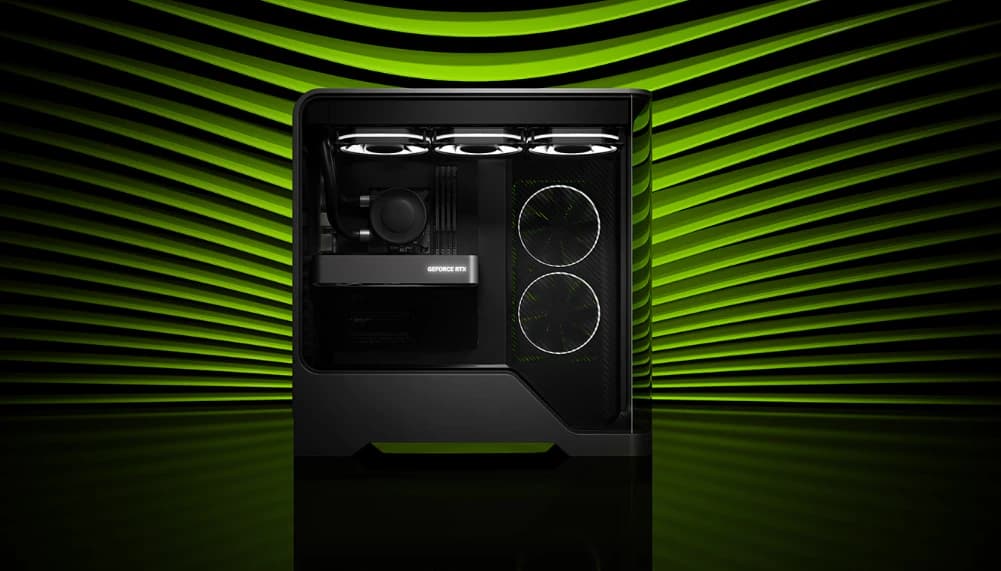
Let’s start with the RTX 5060 – the graphics card NVIDIA is positioning as the most accessible option in its new generation. The RTX 5060 is set to flood the market thanks to its launch price of just £299 (still the going rate for models from Gigabyte and ZOTAC), and it makes full use of the NVIDIA Blackwell architecture with hardware-accelerated ray tracing and AI-powered Multi Frame Generation.
When talking about performance, the RTX 5060 stands out due to its optimised architecture and efficient use of power. It comes equipped with 8 GB GDDR7 VRAM, 32 MB of L2 cache, a 128-bit memory bus (~448 GB/s), and a theoretical performance of around 19 TFLOPS, all running on a power draw of just 145 W. Admittedly, that’s a notable jump from the RTX 4060’s 115 W – roughly 25% more – but that extra power consumption translates into considerable improvements in key technologies that significantly enhance overall performance.
This GPU is essentially tailor-made for gamers who want a genuinely capable PC without spending a fortune, and it’s also ideal for anyone looking to offload productivity tasks from their CPU. This kind of card is ideal for running the vast majority of games beautifully at 1080p Ultra or 1440p High settings, and delivering impressive results with demanding Adobe suite applications.
Technical Specifications of GeForce RTX 5060
The NVIDIA GeForce RTX 5060 stands out as a powerful and efficient GPU, purpose-built for gamers and creators who demand smooth performance and cutting-edge features in their gaming PC. At its core, the GeForce RTX 5060 is equipped with 8GB of ultra-fast GDDR7 memory and 3,840 CUDA cores, ensuring that even the latest AAA titles run seamlessly at high settings. Thanks to 30 fourth-generation RT cores and 120 fifth-generation Tensor cores, this card brings real-time ray tracing and AI-enhanced performance to your system, making every game and creative project look and feel next-level.
With the GeForce RTX 5060, you can expect best-in-class performance for your PC, whether you’re diving into graphically intense games, multitasking across demanding applications, or working on creative projects that require both speed and quality. The card’s optimised architecture means you get efficient power delivery and quiet operation, so your gaming experience remains immersive without distracting noise or excessive heat. It’s the ideal choice for anyone looking to upgrade their gaming PC or build a new system that’s ready for the future.
Connectivity is another strong point for the RTX 5060. The card comes equipped with HDMI, DisplayPort, and USB-C options, making it easy to connect to a wide range of monitors and peripherals. Its compatibility with most modern motherboards and CPUs ensures a hassle-free installation, whether you’re adding it to your current setup or starting from scratch. The RTX 5060 8GB is also a great fit for compact builds and laptops, offering powerful performance without taking up too much space or drawing excessive power.
For those who value efficiency and multitasking, the GeForce RTX 5060 delivers. Its advanced AI features and real-time ray tracing capabilities mean you can enjoy the latest games at high settings, stream content, and tackle creative tasks—all with smooth, reliable performance. The card’s quiet, optimised design makes it perfect for any environment, from a dedicated gaming room to a professional workspace.
In summary, the NVIDIA GeForce RTX 5060 is a versatile, high-quality graphics card that offers a perfect balance of power, efficiency, and value for money. Whether you’re looking to play the latest AAA games, work on demanding projects, or simply want a reliable GPU for your PC, the RTX 5060 is a great choice. Its advanced features, easy integration, and competitive price make it an ideal option for anyone seeking the best performance and experience from their system.
RTX 5060 vs. RTX 4060: What’s the Difference?
| Specifications | RTX 5060 | RTX 4060 |
|---|---|---|
| Architecture | Blackwell 2.0 | Ada Lovelace |
| CUDA Cores | 3840 | 3072 |
| VRAM | 8 GB GDDR7 (28 Gbps) | 8 GB GDDR6 (17 Gbps) |
| Memory Bus | 128-bit | 128-bit |
| Memory Bandwidth | ~448 GB/s | ~272 GB/s |
| Boost Clock Speed | 2.5 GHz | 2.5 GHz |
| Power Consumption | 145 W | 115 W |
| Launch Price | £299 | £299 |
👉 Click and Read More about: RTX 4060: A Complete Analysis of Performance, Efficiency and Price
RTX 5060 vs. RTX 5060 Ti: Key Differences
Given that the RTX 5060 and RTX 5060 Ti launched simultaneously and their starting prices aren’t vastly different, many gamers and professionals might find it worthwhile to opt for the RTX 5060 Ti. Mind you, the 5060 Ti is rather more demanding in terms of power consumption, but it’s worth considering if you’re after roughly 20% more performance than the standard 5060 in both gaming and productivity – particularly if you go for the 16 GB version. When upgrading or building a new system, make sure to choose the right box (PC case) to ensure your GPU fits properly and has optimal airflow for cooling.
| Specifications | RTX 5060 | RTX 5060 Ti |
|---|---|---|
| Architecture | Blackwell 2.0 | Blackwell 2.0 |
| CUDA Cores | 3840 | 4608 |
| VRAM | 8 GB GDDR7 (28 Gbps) | 8 GB / 16 GB GDDR7 (28 Gbps) |
| Memory Bus | 128-bit | 128-bit |
| Memory Bandwidth | ~448 GB/s | ~448 GB/s |
| Boost Clock Speed | ~2.50 GHz | ~2.57 GHz |
| Power Consumption | 145 W | 180 W |
| Launch Price | £299 | £379 (8 GB) / £429 (16 GB) |
Performance in Games and Creative Tasks
If you’re after a graphics card for gaming, the main distinction between the RTX 5060 and RTX 5060 Ti comes down to the resolution at which they can deliver ultra-quality visuals. With the RTX 5060, you’ll comfortably game at 1080p HD resolution, whilst the RTX 5060 Ti can squeeze every last drop of graphical fidelity from games at 1440p – that’s proper high-resolution gaming. Games with cyberpunk settings, featuring neon-lit streets and immersive environments, really showcase the RTX 5060’s ray tracing and DLSS capabilities, delivering realistic lighting, shadows, and reflections. Naturally, the rest of your system needs to keep pace as well.
As for productivity tasks, you’ll almost certainly prefer the RTX 5060 Ti with 16 GB for editing lengthy video projects, as it can deliver up to 25% more performance than the RTX 5060. Exports in Adobe Premiere can be up to 30% faster, and those 16 GB prevent stuttering when you’re working with massive files in Premiere, Illustrator or Photoshop.
For lighter workloads, such as streaming or less graphically demanding games, both cards offer virtually identical performance. However, it’s worth noting that if you’re multi-streaming, the RTX 5060 Ti’s 16 GB provides superior headroom, whereas the standard RTX 5060 can occasionally struggle. That said, both are excellent choices for most use cases. The 5060 Ti simply goes that bit further than the 5060.
RTX 5060: What Does it Cost?
The MSRP for the 5060 is $299, which typically translates directly to £299 in the UK market. Several months after launch, it’s still readily available at around these prices. The Gigabyte GeForce RTX 5060 Eagle OC, for instance, retails at exactly £299.90 from most stockists, with other variants hovering around the £319 mark.
Considering that the remaining RTX 4060 stock is priced similarly to its new-generation counterpart, the 4060 doesn’t really represent a sensible way to save money. As long as prices remain comparable, the logical choice is the 5060 – at least until we see whether prices climb in 2026, which seems increasingly likely given the insatiable demand from AI data centres.
What Might the RTX 5060 Cost in 2026?
The ever-growing hardware demands of AI data centres are putting enormous pressure on RAM, SSD and graphics card prices. By late 2025, DDR5 RAM prices had already shot up considerably, with SSDs and 16 GB graphics cards seeing roughly 20% increases. This trend is expected to intensify over the coming months, so it’s well worth keeping a close eye on it.
In the graphics card market, those with higher VRAM capacities are most in demand at data centres, so you’ve got slightly more breathing room with the 5060, given that data centres aren’t particularly fussed about it – for now, at least. However, should we see another shortage akin to what happened with graphics cards in 2020, you can be fairly certain the 5060 won’t remain at £300 – it could well climb to £500 or even higher.
RTX 5060 vs. Previous Generations: Is it Worth Upgrading?
Let’s examine whether it’s actually worth swapping out your ageing graphics card for an RTX 5060. Naturally, if money’s no object and you enjoy having the latest kit each year, crack on and grab the best RTX 5060 Ti you can find. But if you need to balance your budget and upgrade your PC more selectively, here’s what improvements the RTX 5060 offers over its predecessors.
RTX 5060 Upgrade Guide
Is It Time to Upgrade? A Sensible Assessment for Your Current GPU
GTX 1660 / RTX 2060 3–4 Generations Behind Time to UpgradeA Generational Leap Worth Taking
With a gap of three or four generations, it’s definitely time for a change. That said, you should consider not just the improvements the RTX 5060 brings, but whether your motherboard can support it, and any potential bottleneck from your RAM or CPU. If you need a complete PC overhaul, it’ll be a fair investment—but it’s now or never. AI data centres are devouring the market.
✓ Significant performance gains ✓ Modern architecture benefits ⚠ Check motherboard compatibility ⚠ Consider RAM/CPU bottlenecks RTX 3060 2 Generations Behind It DependsWeigh Up Your Options Carefully
Here we’re entering ‘it depends’ territory. Although the 3060 is two generations behind the RTX 5060, it still delivers remarkably solid performance in HD gaming and most productivity tasks, and holds up reasonably well in 4K too. Base your decision more on your budget than on the RTX 5060’s advantages—however numerous they may be.
✓ Your 3060 remains capable ✓ Solid HD & productivity performance 💷 Budget should guide your decision 📊 Nice-to-have, not essential RTX 4060 1 Generation Behind No RushHold Off Unless Money’s No Object
Generally speaking, there’s no pressing need to upgrade from an RTX 4060 to an RTX 5060 given the improvements this generational jump offers. Although the Blackwell architecture’s Multi Frame Generation technology is rather tempting—with its ability to multiply FPS like never before—the upgrade only makes sense if you can genuinely afford it.
✓ Your 4060 is still excellent 🎮 Multi Frame Gen is tempting 💷 Only if budget permits ⏳ Skip this generation if tight
Market Alert: AI data centre demand may push GPU prices up in 2026.
If you’re planning to upgrade, buying sooner rather than later could save you a fair bit.
👉 Further reading: How to Choose the Right Low-Profile Graphics Card for Your PC
Who is the RTX 5060 Best Suited For?
To summarise, the RTX 5060 is the ideal choice for mainstream gamers who want to enjoy the best games in HD without spending a small fortune on a new graphics card. It’ll serve you brilliantly for your favourite titles, provided you don’t try forcing 4K resolution at ultra settings – that’s where it might start to stutter a touch – and it should remain future-proof for at least five years without any bother.
It’s also superb for content creators who don’t require professional-grade editing continuously, as you’ll have a card that’s more than adequate for streaming and performs excellently for light to moderate edits in Premiere or After Effects. What’s more, being more compact than options like the RTX 5070, it’s also ideal if you’ve got a small form factor case.
So, Should You Buy the RTX 5060 Now?
If you’re thinking of upgrading your graphics card and have around £300 to spend, the short answer is yes, absolutely. Not merely because of the excellent value the RTX 5060 offers – its Multi Frame Generation technology is particularly appealing – but especially because prices are expected to rise in 2026. If demand from AI data centres continues to grow, RTX 5060 cards currently priced at £300–£320 could easily jump to £400 or £500.
Even if you’re still comfortable with an RTX 3060, the RTX 5060 isn’t just a straightforward hardware improvement – it also incorporates new AI technologies that boost gaming performance even further. As for productivity performance, consider your current workload and what you anticipate in future, as it might be more sensible to opt for the RTX 5060 Ti’s 16 GB.
Frequently Asked Questions About the RTX 5060
u003cstrongu003eWhen was the RTX 5060 released?u003c/strongu003e
The RTX 5060 launched in May 2025, and since then, various models from Gigabyte, Asus, Zotac and MSI, amongst other major brands, have become available. At present, there are no supply issues with the 5060 in the UK.
u003cstrongu003eIs the RTX 5060 better than the RTX 4060?u003c/strongu003e
Yes, the RTX 5060 offers considerably improved specifications over the RTX 4060 in both gaming and productivity. As a rough guide, you can expect the RTX 5060 to perform between 10% and 20% better than the RTX 4060, albeit with higher power consumption.
u003cstrongu003eRTX 5060 or RTX 5060 Ti: which should I choose?u003c/strongu003e
If you’re on a tight budget, you’re happy gaming at 1080p ultra, or you work on productivity tasks that aren’t particularly demanding, the RTX 5060 is your best bet. But if you can stretch to a bit more, want to enjoy your games in 1440p/4K, or work with demanding applications, the RTX 5060 Ti with 16 GB is the better choice.
u003cstrongu003eIs the 16 GB RTX 5060 Ti necessary for gaming?u003c/strongu003e
Not at all. Its 16 GB of VRAM makes it ideal for gamers who want to enjoy the most demanding titles at 4K, but the 8 GB 5060 will cope admirably with the vast majority of games at HD resolution.
u003cstrongu003eWhat is the actual price of the RTX 5060?u003c/strongu003e
The MSRP for the RTX 5060 is £299, and most manufacturers are sticking fairly close to this figure. As of December 2025, you can pick up the RTX 5060 for around £300–£320 across various brands, though prices may well increase in 2026 if demand from AI data centres continues to climb.