If you’re wondering how to set up a home office in a small space, here are the essentials:
- It’s entirely possible to create a small space home office, even in a studio flat
- Your choice of furniture (compact desk, corner desk or foldaway desk) is crucial for making the most of every square metre
- Good organisation and visual zoning of your workspace improve both comfort and productivity
- Compact equipment, such as a Mini PC, makes it far easier to optimise your workspace without cluttering up your desk
Throughout this article, we’ll share expert tips to help you boost productivity and make the most of your small space office.
Working or studying from home when you’re short on space can quickly become rather frustrating. Yet with a few sensible choices, it’s perfectly possible to create a functional, comfortable and discreet small space home office. By exploring small home office ideas and incorporating ample storage solutions, you can make a big difference in maximising your workspace without encroaching on the rest of your living area.
Why Has Setting Up a Home Office in a Small Space Become So Essential?
Our relationship with domestic space has changed considerably in recent years, particularly with the rise of remote working and various hybrid working arrangements. For many people, the question of setting up a home office arose rather quickly.
However, not everyone has a spare room to dedicate to a workspace. This is especially true in urban areas – think London flats, city-centre apartments in Manchester or Birmingham – where living spaces tend to be on the smaller side. Yet improvising a workspace on the corner of the dining table or on the sofa can soon take its toll on your concentration and comfort.
Creating a small space home office, however modest, allows you to establish a clear boundary between your personal and professional life. A dedicated workspace promotes better organisation, reduces distractions and helps establish a more effective working routine. It also contributes to your daily well-being – whether by avoiding uncomfortable postures or visual clutter. Keeping the workspace organised and clutter-free is essential for maintaining a stylish small office.
Even without a separate room, a well-thought-out desk becomes a functional anchor point. Designing your own small office space to suit your needs ensures the layout and features are tailored for maximum productivity and comfort. It’s an essential element for working in proper conditions from home.
How to Set Up a Home Office in a Small Space
Creating a workspace in a limited area requires a methodical approach above all else. Every square metre counts, so maximising limited square footage and incorporating storage space are essential for both comfort and functionality. Your choices of location and furniture have a direct impact on how well you can organise and utilise the available area. Understanding how to set up a small space home office helps you avoid common pitfalls and create a working environment genuinely suited to daily use.
Utilising vertical space is key in small office environments to create additional storage without taking up floor space.
Choosing the Ideal Location
In a small home, your desk often needs to be installed in a room that’s already serving another purpose. Using a corner of the living room is the most common solution – provided you zone the space properly to minimise distractions. The bedroom can also accommodate a discreet desk, particularly when it’s built into a wall or tucked into an alcove. Some properties even allow you to make use of often-forgotten spaces, such as a wide hallway or a recess beneath a window, transforming these into a practical work space.
Natural light plays an essential role. It’s advisable to position your desk near a window, as this improves visual comfort and reduces eye strain. Positioning the desk facing the window can enhance sunlight intake, which benefits mood and makes a small space feel more open, but be mindful of potential glare or reflections on your computer screen and adjust your setup or lighting as needed. For the overall setup, simple visual zoning is often sufficient – a rug, open shelving, or a different wall colour. Wall-mounted shelves can also help keep the floor clear and create the appearance of a larger space. These markers help create a distinct and identifiable space.
These principles are fundamental when considering how to create an office in a small space without compromising the room’s balance.
Choosing a Desk Suited to Small Spaces
Selecting the right desk for your needs is essential when setting up a small space office. There are various types of desks designed for small spaces. Here are the most practical options for gaining comfort and space:
- Corner desk for small spaces: Ideal for making use of areas that would otherwise go unused. These office desks provide an extra work surface without impeding movement around the room, and fit easily into a living room or bedroom.
- Foldaway desk for small spaces: Perfect for studio flats or multi-purpose rooms, as it folds away after use. It’s a flexible solution for working without a permanent setup, taking up valuable floor space.
- Desk with integrated shelving: This type combines storage with a work surface, making good use of vertical space. It’s particularly well-suited to small homes where every bit of storage counts.
When choosing the right desk, consider both workspace efficiency and ergonomic support. The right desk, paired with an ergonomic chair, helps maintain comfort and proper posture during long work sessions.
Your choice of a small space desk, therefore, depends on your aesthetic preferences as much as your practical needs. Remember, choosing the right ergonomic chair is crucial for comfort in a small home office.
Utilising Unused Spaces in Your Home Office Setup
Maximising your office space often means looking beyond the obvious. Even the smallest space in your home—like an overlooked corner of the dining room or a rarely used spare room—can be transformed into a productive home office with a little creativity. Start by identifying areas that receive plenty of natural light, as this can make your work environment feel more open and energising.
Smart storage solutions are your best friend in these scenarios. Use vertical space with shelving or wall-mounted organisers to keep your floor space clear and your office supplies within reach. Choose furniture that fits the room’s dimensions, such as a compact desk or a corner unit, to ensure you have enough space to move comfortably. With the right small office ideas, you can create a dedicated office area that blends seamlessly into your home, making even the most unconventional spaces work for you.
How to Balance Comfort and Productivity in a Small Space Home Office
For many people, particularly since the pandemic, working from home has become the norm. Having a dedicated workspace has therefore become essential. However, setting up a home office in a small space requires striking the right balance between comfort, efficiency and discretion. Fortunately, even without a dedicated room, a well-designed workstation can help maintain a good level of focus day to day and boost productivity by creating an inspiring and functional environment.
Basic ergonomics remain essential. You need an appropriate desk height, a comfortable chair and a screen positioned at eye level. All these adjustments help reduce physical fatigue. Adjustable sit-stand desks also promote movement, helping to prevent fatigue during long hours.
In a compact space, organisation also plays a key role. A clear work surface, accessible storage and effective cable management all contribute to a more calming environment. Creating a dynamic work environment with flexible layouts and incorporating quiet areas for focused work can help maintain concentration and reduce distractions.
Finally, quiet is a determining factor for productivity. Visually zoning your small space office and establishing clear routines helps reduce distractions and better separate work time from personal time – even in a compact home. Optimising the arrangement of furniture can create more room, making the workspace feel more comfortable and efficient.
At the end, remember that creating a cohesive design with similar materials and colours can enhance the aesthetic of your small office, and a tidy wall helps keep a tidy mind in a small office space.
Click and Read More about The Best Fanless Mini PC for Quiet and Efficient Home Computing
Optimising Your Space with Compact and Clever Equipment
In a small space home office, your choice of equipment is just as important as your choice of furniture. Embracing flexible workspaces and keeping the floor clear can work wonders for small office organisation, making the area feel more open and adaptable. An unsuitable kit can quickly clutter up your desk and undermine your overall organisation, even when the layout itself is well thought out.
Cable management tools help keep wires organised and reduce visual clutter in small offices. Floating desks create an open feeling by keeping the floor visible, contributing to vertical efficiency. Additionally, using pegboards or wall-mounted organisers can help keep smaller items off the desk and within easy reach.
Why a Traditional Desktop PC Takes Up Too Much Room in a Small Office
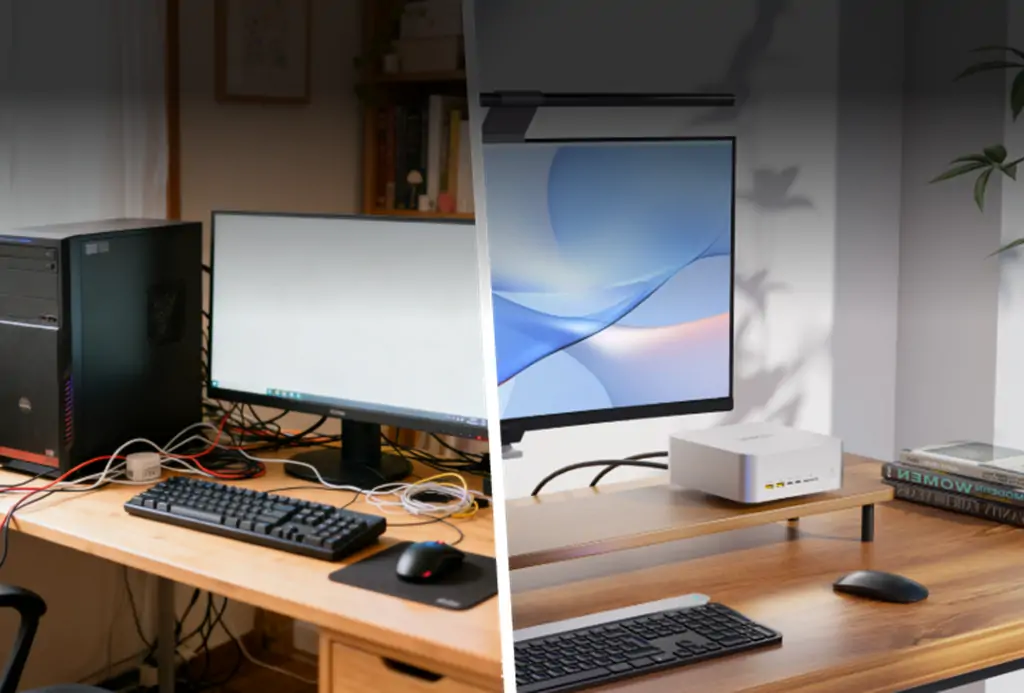
A traditional desktop computer typically includes a bulky tower unit – an element that’s difficult to accommodate in a restricted space. Whether placed on the floor or on the desk, this tower reduces the available surface area and also limits available storage space, complicating the arrangement of your workspace. Add to this the tangle of visible cables – power, monitor, peripherals – and the visual clutter quickly mounts up, creating an impression of disorder.
The noise and heat generated by some traditional computers can also become bothersome, particularly during extended use in a confined environment. Finally, their rigid form factor leaves little room for flexible installation, making them tricky to integrate into a discreet or multi-function office setup. Good lighting is essential in a small office to prevent eye strain and create a welcoming atmosphere, especially when space is limited.
Mini PC: An Ideal Solution for a Small Space Home Office
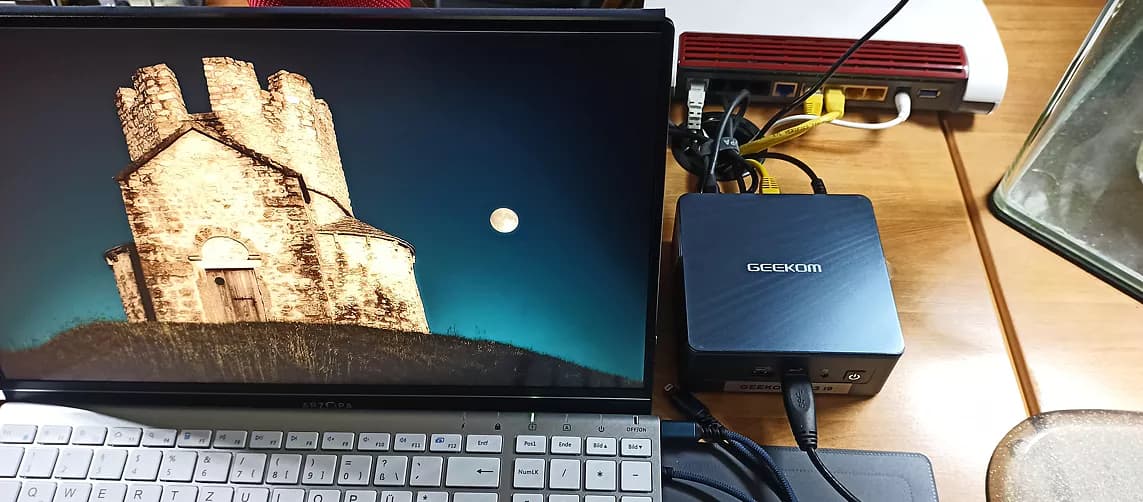
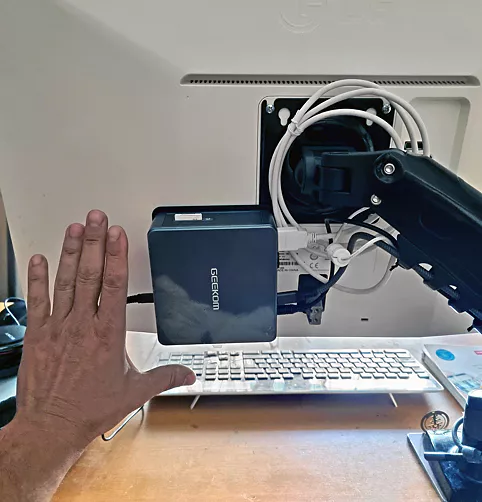
To address this problem, alternatives exist. The Mini PC has emerged as an ideal solution for optimising a small space home office. Its small form factor means it can be mounted behind a monitor, slipped under a desk or hidden inside a piece of furniture – freeing up your work surface in the process. This discretion makes for a tidier, more functional setup.
Despite its reduced size, the GEEKOM Mini PC delivers performance suited to everyday tasks – office work, web browsing, video conferencing and remote working. Certain models even support multiple monitors, which is a genuine asset for boosting productivity without additional clutter. Its low power consumption and quiet operation also make it particularly well-suited to small workspaces.
Storage and Organisation Solutions for Small Space Home Offices
Keeping your small space home office organised is key to maintaining a productive and stress-free workday. Opt for built-in storage or floating shelves to make the most of your vertical space, freeing up valuable desk space for focused work. Wall-mounted organisers are a great solution for keeping office supplies tidy and easily accessible, while a corner desk or L-shaped desk can help you carve out a comfortable workspace without overwhelming the room.
Don’t overlook the importance of good lighting—task lighting from desk lamps can help reduce eye strain and keep you alert throughout the day. When choosing storage options, look for pieces that combine function and style, such as decorative boxes or baskets that complement your décor. By creating a streamlined look and keeping your workspace clutter-free, you’ll find it easier to stay focused and make the most of your small office space.
Maintaining a Clutter-Free Space
A clutter-free home office is essential for both productivity and peace of mind. Establish a routine for tidying up your desk and organising your office supplies—simple tools like a pen holder, paper tray, or charging station can make a big difference in keeping your space orderly. Avoid letting your office area become a dumping ground for unrelated household items by designating specific storage solutions for work materials only.
Prioritise air quality by incorporating greenery or an air purifier, which can help you work comfortably and reduce stress. By keeping your workspace organised and separate from your home life, you’ll create an environment that supports focus and efficiency. Remember, a tidy office is not just about aesthetics—it’s about creating a space where you can stay focused and do your best work.
Adding Personal Touches to Your Small Space Home Office
Your home office should be a reflection of your personal style as well as a functional workspace. Add decorative items like artwork, a cosy rug, or a few plants to make the space feel inviting. An ergonomic chair in a bold colour or a unique mousepad can inject personality while supporting your comfort.
Experiment with different lighting solutions—string lights, a statement floor lamp, or even a stylish desk lamp—to set the right mood for focused work. By thoughtfully incorporating elements that inspire you, you’ll create a small space home office that feels uniquely yours and motivates you to be productive every day.
Example Setup: Small Space Home Office with Mini PC
To help you visualise the possibilities, here’s an example of how to set up a home office in a small space. Imagine a 25-square-metre studio flat in a city like London, Bristol or Edinburgh. The desk can be positioned in a corner of the living area, near a window to take advantage of natural light. Opting for a compact corner desk allows you to make use of an otherwise wasted spot whilst preserving circulation around the room. Using light, bright colours and maximising natural light can help the area feel like a larger space.
When selecting furniture, consider pieces that can double as guest room seating, such as a stylish office chair or a small sofa bed, making the space versatile for overnight visitors. Incorporating ample storage, like vertical bookshelves or under-desk drawers, is essential for keeping the workspace organised and efficient. Repurposing used furniture is also a sustainable and cost-effective solution for setting up a small home office.
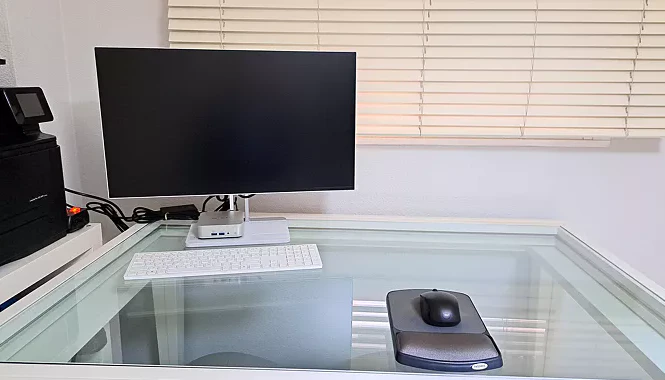
The workstation includes a monitor mounted on an articulating arm, which frees up the desk surface. A compact keyboard and mouse have been chosen to reduce clutter further still. Finally, a discreet mini PC is installed behind the monitor – a powerful option essential for remote working, yet taking up virtually no additional space.
This modest arrangement transforms a simple corner into a functional and pleasant workspace, perfectly suited to daily tasks. With a few well-chosen decorative touches—such as plants, a rug, and some artwork—it integrates harmoniously into the home. Adding plants to a small office can improve air quality and create a calming atmosphere, helping to reduce stress. It demonstrates that working effectively is entirely achievable, even in a limited space.
FAQ: Small Space Home Office
How do I set up a home office in a small flat?
To set up a home office in a small flat, it’s important to choose a well-lit location and visually zone the space to create an identifiable work area. Optimising your home office space with compact, multi-functional furniture makes it easier to integrate into the room without cluttering the rest of your home. Additionally, using light-colored paint on the walls can help create a brighter atmosphere in a small office.
What type of desk should I choose for a small space?
A corner desk, foldaway desk or desk with built-in shelving allows you to make the most of every square metre without sacrificing work surface. Selecting the right desk for your needs is essential to optimising workspace efficiency, avoiding clutter, and ensuring comfort. The key is to favour designs that adapt to your available space and offer integrated storage. Additionally, using vertical space can expand your storage options in a small home office.
Which computer is best suited to a small space home office?
For a small space home office, a mini PC is ideal. Its compact form factor means it can be placed behind the screen or under the desk, freeing up your work surface. A mini PC can work wonders for maximising both space and efficiency, making it a smart choice for small offices. It offers performance suited to remote working, office tasks and web browsing – all whilst remaining quiet and unobtrusive.
Troubleshooting Common Issues in Small Space Home Offices
Small space home offices can present unique challenges, but a little imagination goes a long way. If your room lacks natural light, try reflecting light with mirrors or choosing lighter wall colours to make the space feel larger and brighter. For persistent clutter, invest in storage solutions that suit your workflow and stick to a regular cleaning schedule to keep your office organised.
Distractions can be minimised by setting up a quiet area or using noise-cancelling headphones, helping you stay focused even in a busy household. Remember, every space is different—don’t hesitate to experiment with new layouts or storage ideas until you find what works best for your needs. With a flexible approach and smart solutions, you can create a comfortable and efficient home office, no matter how limited your space may be.