Certified Quality | 3-Year Warranty
Powerful, compact, and built for demanding workloads — Ryzen 9 mini PCs deliver exceptional multi-core performance in a space-saving design. Whether you’re editing 4K video, running virtual machines, or building an efficient home office, this category brings desktop-grade power into a small form factor pc setup.
A Ryzen 9 mini PC is designed for serious workloads:
If your work slows down your current PC, this is where Ryzen 9 makes a difference.
Feature
Ryzen 9 Mini PC
Performance
Strong everyday performance
Higher sustained performance under heavy load
Cores / Threads
8C / 16T (typical)
8C / 16T (higher boost clocks)
Multitasking
Smooth for office & browsing
Better for heavy multitasking & pro apps
Video Editing
Good (1080p–light 4K)
Excellent (4K & complex timelines)
Programming
Suitable for most projects
Better for large builds & virtual machines
Basic AI support
Enhanced with Ryzen AI (NPU acceleration)
Gaming
Casual gaming (iGPU limits)
Slightly better, still iGPU-limited
Power Consumption
Lower
Slightly higher under load
Price
More affordable
Premium tier
Best For
Everyday users
Creators, developers, power users
Feature
GEEKOM Ryzen 9 Series
Graphics
Radeon 780M (strong iGPU)
Iris Xe / Arc (varies by model)
AI Acceleration
Ryzen AI NPU (local AI tasks)
Intel AI Boost / NPU (newer models)
Power Efficiency
Optimised for low power (HS platform)
Typically higher power consumption
CPU Performance
Strong multi-core performance
Higher peak performance (model-dependent)
Thermals & Noise
Compact & quieter
Can run hotter under load
Casual gaming (no dGPU)
Similar, depends on GPU config
Best For
Balanced performance & efficiency
Maximum raw CPU performance
Whether a Ryzen 9 mini PC is overkill depends entirely on what you plan to use it for:
Ryzen 9 mini PCs might be overkill if you primarily:
Ryzen 9 mini PC makes sense if you:
Gaming considerations: For pure gaming, a Ryzen 7 or even Ryzen 5 often provides nearly identical performance at lower cost, especially at higher resolutions. The extra cores of Ryzen 9 rarely translate to significantly better gaming in most current titles.
Budget perspective: If choosing Ryzen 9 means compromising on GPU, RAM, or storage, you’d likely get better overall system performance by choosing a Ryzen 7 and putting the savings toward other components.
Ryzen 9 is generally faster than Ryzen 7, but the difference varies depending on the specific task:
Core specifications:
Where Ryzen 9 is noticeably faster:
Where they’re nearly identical:
Bottom line: Ryzen 9 is faster overall, especially for multi-threaded work, but Ryzen 7 offers better value for most users since many applications can’t fully utilize the extra cores. The speed advantage of Ryzen 9 only matters if your workload can actually use those additional cores.
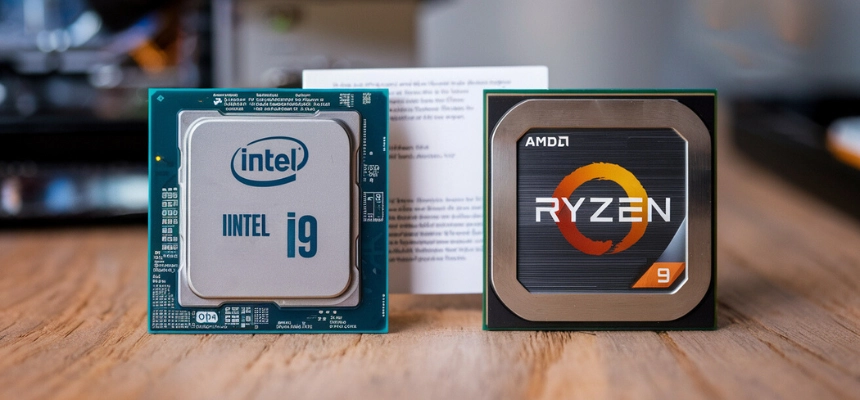
AMD Ryzen 9 and Intel Core i7 processors aren’t directly equivalent – they’re different product tiers from competing manufacturers.
Ryzen 9 is AMD’s high-end consumer desktop and laptop line, competing more directly with Intel’s Core i9 series. These processors typically offer more cores and threads (ranging from 12-24 cores in current generations) and are positioned for enthusiasts, content creators, and heavy multitasking.
Intel Core i7 is Intel’s upper-mid-range to high-end tier, sitting below the i9. Modern i7 processors typically have 8-20 cores depending on the generation and whether it’s desktop or mobile.
In terms of performance comparisons:
The actual performance between any two specific processors depends on the generation, model, and your use case. For example, a newer generation i7 might outperform an older Ryzen 9 in certain tasks.
Click to compare Intel mini PCs and AMD mini PCs.
Ryzen 9 provides strong CPU performance, but gaming depends on GPU capability.
Think of Ryzen 9 as the engine — graphics still matter.