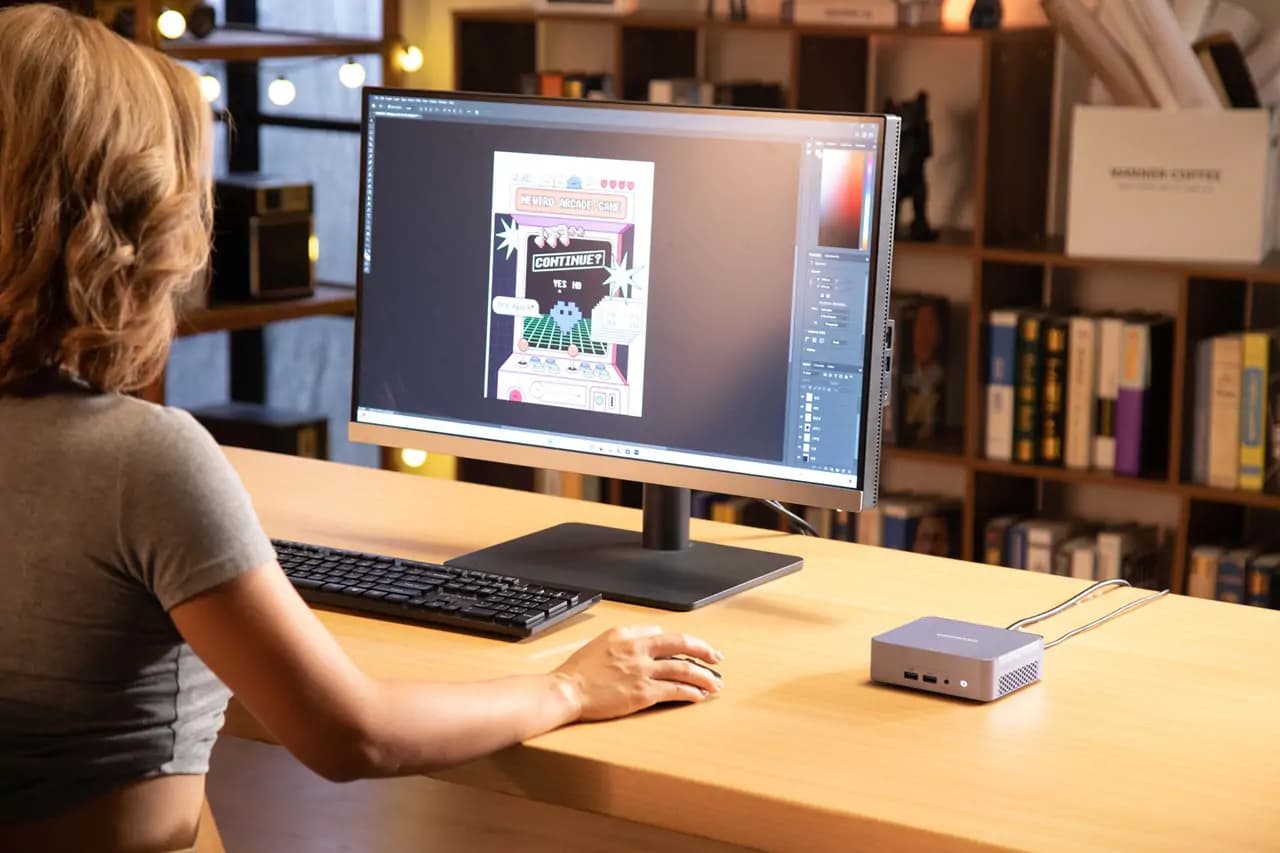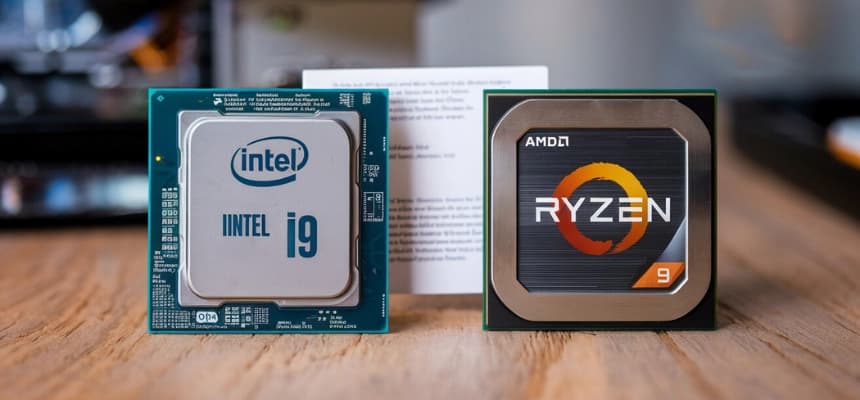
In 2026, the Ryzen 7 5800H is still a capable 8-core/16-thread mobile chip for productivity and light gaming, scoring ~X in Cinebench R23 multi-core. It holds up well in mini PCs, though gaming relies on its Radeon Vega 8 iGPU.
AMD Ryzen 7 5800H Specifications
| AMD Ryzen 7 5800H – Key Specifications | |
|---|---|
| Cores / Threads | 8 Cores / 16 Threads |
| Base Clock | 3.2 GHz |
| Max Boost Clock | Up to 4.4 GHz |
| Architecture | Zen 3 (“Cezanne”) |
| Manufacturing Process | 7 nm (TSMC) |
| Default TDP | 45 W (configurable 35–54 W) |
| Integrated Graphics | AMD Radeon Vega 8 (8 GPU cores, up to 2,000 MHz) |
| L2 Cache | 4 MB |
| L3 Cache | 16 MB |
| Memory Support | DDR4-3200 / LPDDR4X-4266 |
| PCIe Version | PCIe 3.0 |
| Socket | FP6 (BGA) |
| Release Date | January 2021 |
AMD Ryzen 7 5800H Benchmark Results
Synthetic benchmarks are the quickest way to gauge raw CPU performance, so we’ve gathered the Ryzen 7 5800H’s typical scores across the three most widely used tests – Cinebench R23, Geekbench 6 and PassMark – and lined them up against its closest Intel rivals. The figures below are representative averages; real-world results vary with cooling and power limits, and a chip running at its full 45 W in a well-ventilated mini PC will hold higher sustained scores than one that throttles.
| Processor | Cinebench R23 (Single) |
Cinebench R23 (Multi) |
Geekbench 6 (Single) |
Geekbench 6 (Multi) |
PassMark CPU Mark |
|---|---|---|---|---|---|
| AMD Ryzen 7 5800H | ~1,450 | ~12,000 | ~2,050 | ~8,400 | ~22,500 |
| Intel Core i7-11800H | ~1,450 | ~11,000 | ~2,100 | ~8,300 | ~21,500 |
| Intel Core i5-12500H | ~1,700 | ~13,000 | ~2,400 | ~10,000 | ~25,500 |
| Intel Core i5-13500H | ~1,750 | ~13,500 | ~2,450 | ~11,500 | ~26,500 |
Figures are typical averages drawn from published benchmark databases and may differ from your own results depending on cooling, power limits and system configuration.
Cinebench R23
Cinebench R23 measures CPU power through a CPU-rendered 3D scene, making it an excellent gauge of sustained multi-threaded performance. The Ryzen 7 5800H scores around 1,450 points in the single-core test and roughly 12,000 in the multi-core test. That multi-core result is one of the chip’s strongest showings – it edges ahead of the eight-core Intel Core i7-11800H thanks to Zen 3’s efficiency, and it stays competitive even against newer hybrid Intel chips. Because Cinebench rewards cores that can hold their boost clocks, this is exactly where a properly cooled mini PC lets the 5800H shine: with steady power delivery, it sustains those multi-core scores far better than a thin-and-light laptop that throttles under load.
Geekbench 6
Geekbench 6 leans on shorter, real-world-style workloads – image editing, compression, machine-learning routines – so it reflects everyday responsiveness more closely than a pure rendering test. Here the 5800H lands at roughly 2,050 single-core and 8,400 multi-core. Single-core performance is the chip’s age showing. Intel’s later Alder Lake and Raptor Lake i5 parts pull noticeably ahead in single-threaded tasks, which translates to slightly snappier app launches and web browsing. In multi-core, though, the 5800H’s eight full cores keep it well within touching distance of those newer chips and comfortably ahead of older eight-core competitors.
PassMark CPU Mark
PassMark’s CPU Mark blends a wide range of integer, floating-point and multi-threaded tests into a single overall figure, which is why it’s so often used for quick cross-generation comparisons. The Ryzen 7 5800H posts a CPU Mark of around 22,500 – a score that still comfortably clears the threshold for smooth multitasking, productivity and content work in 2026. It sits just above the Core i7-11800H and a little below the newer Core i5 chips, confirming the overall picture: the 5800H is no longer a class leader, but it remains a genuinely capable performer that holds its own against current mid-range mobile silicon.
Real-World Performance
Benchmark scores are useful, but daily use matters more.
So how does the Ryzen 7 5800H feel in real tasks?
In short: fast and smooth for most things.
Here’s what to expect across three common workloads.
Everyday Productivity
For day-to-day work, the 5800H feels quick. Web browsing, email and office apps all run without lag. You can keep dozens of browser tabs open and switch between them easily. Video calls on Zoom or Teams stay smooth, even with other apps running. The eight cores handle heavy multitasking with ease. For most home and office users, this chip is more than enough.
Content Creation
The 5800H is a solid choice for creative work. Photo editing in Lightroom or Photoshop feels responsive. Video editing works well too, especially for 1080p and short 4K clips. Exports are quick thanks to the eight cores and sixteen threads. Longer 4K projects still run fine, though a newer chip would render them faster. For hobbyists and semi-pro creators, it strikes a good balance.
Development Workloads
Developers will find the 5800H very capable. Code compiles quickly, and the high core count helps with large projects. You can run an IDE, a local server and several containers at once. Virtual machines work well, and Docker runs smoothly. The 16 MB of L3 cache also helps with heavy build tasks. For most programming and web development, it has plenty of power.
Ryzen 7 5800H Gaming Performance
One thing to be clear about first: in a mini PC, the Ryzen 7 5800H games on its built-in Radeon Vega 8 graphics. There is no separate graphics card. So all the results below come from the integrated GPU. This sets the right expectations before we look at the numbers.
Integrated Graphics (Radeon Vega 8): What to Expect
The Vega 8 is a capable integrated GPU, but it is not a gaming card. It handles light and older games well. It struggles with heavy modern titles. Fast system memory helps a lot, since the iGPU shares your RAM. For best results, use dual-channel RAM. Think of it as good for casual gaming, not high-end play.
Esports Titles (1080p, Low–Medium Settings)
This is where the Vega 8 does best. Popular esports games run smoothly. Titles like CS2, Valorant, League of Legends, Dota 2 and Rocket League all play well. Expect around 40–60 FPS at 1080p on low to medium settings. Some lighter games run even faster. For casual online gaming, the 5800H is a solid choice.
AAA Titles (Low Settings / Upscaling / 720p)
Big modern games are harder for the Vega 8. To play them, you need to lower the settings. Drop to 720p, use low presets and turn on upscaling like FSR. With these tweaks, many AAA games reach 30–40 FPS. Older AAA titles run better than brand-new ones. It works, but expect to make compromises.
Boosting Gaming Performance with an eGPU
Want more gaming power? An external graphics card (eGPU) is the answer. It connects through a high-speed port and adds a real desktop GPU. This lets the 5800H play demanding games at high settings. Note that the connection adds a small performance cost. Still, it is a great way to upgrade later without buying a new PC.
Ryzen 7 5800H vs Intel Processors
How does the Ryzen 7 5800H compare to Intel? The table below lines it up against three popular Intel mobile chips. We then break down each matchup in plain terms.
| Processor | Cores / Threads |
Cinebench R23 (Multi) |
Geekbench 6 (Single) |
PassMark CPU Mark |
|---|---|---|---|---|
| AMD Ryzen 7 5800H | 8 / 16 | ~12,000 | ~2,050 | ~22,500 |
| Intel Core i7-11800H | 8 / 16 | ~11,000 | ~2,100 | ~21,500 |
| Intel Core i5-12500H | 12 / 16 | ~13,000 | ~2,400 | ~25,500 |
| Intel Core i5-13500H | 12 / 16 | ~13,500 | ~2,450 | ~26,500 |
Ryzen 7 5800H vs Core i7-11800H
These two chips are close rivals. Both have eight cores and sixteen threads. Both launched around the same time. In single-core tasks, they are nearly equal. In multi-core work, the 5800H pulls slightly ahead. It is also more power-efficient, which suits a compact mini PC. The i7-11800H can pair with stronger laptop graphics cards. But on the CPU side, the 5800H is the better all-rounder.
Ryzen 7 5800H vs Core i5-12500H / i5-13500H
These Intel chips are newer. They use a mix of performance and efficiency cores. This gives them an edge in single-core speed. Apps open a little faster, and the system feels snappy. In multi-core tasks, they are also slightly ahead. So in raw numbers, the newer i5 chips win. But the gap is smaller than it looks. The 5800H still handles the same daily tasks with ease. And it often comes at a lower price.
Which Intel CPU Is Equivalent to the Ryzen 7 5800H?
The closest Intel match is the Core i7-11800H. Both share the same core count and similar overall performance. If you look at newer chips, the Core i5-12500H is the nearest equal. It offers comparable multi-core power, with a bit more single-core speed. In short, the 5800H sits in the upper mid-range. It competes with Intel’s i7 of its own generation and Intel’s newer i5 chips.
Ryzen 7 5800H vs Other AMD CPUs
How does the 5800H compare within AMD’s own range? Here we look at three chips: one older and efficient, one a step up, and two newer options for an upgrade path.
vs Ryzen 7 5700U (Efficiency)
The 5700U is the efficiency choice. Despite the similar name, it is built on the older Zen 2 architecture rather than Zen 3. It runs at a low 15W, so it uses less power and runs cooler. This makes it great for thin, quiet, battery-friendly devices. But it is much slower under load. The 5800H has far more multi-core power. If you want performance, the 5800H wins easily. If you want low power and long battery life, the 5700U is a better fit.
vs Ryzen 7 6800H (Zen 3+)
The 6800H is the natural next step. It uses the newer Zen 3+ architecture on a 6nm process. Clock speeds are higher, so it is faster across the board. The biggest gain is graphics. It swaps the old Vega 8 for the Radeon 680M (RDNA 2). This makes a big difference in gaming. For pure CPU work, the jump is modest. But for built-in graphics, the 6800H is clearly ahead.
Ryzen 7 7840HS / 8845HS (Upgrade Path)
These chips are the modern upgrade path. Both use Zen 4 and a 4nm process. They are much faster than the 5800H in every task. They also include the Radeon 780M (RDNA 3), which is a strong integrated GPU. On top of that, they add an NPU for AI tasks. The 8845HS has the more capable AI engine of the two. If you want the latest performance and AI features, these are the chips to choose. The 5800H still holds up well, but these show how far things have moved.
Is the Ryzen 7 5800H Still Good in 2026?
Yes. In 2026, the Ryzen 7 5800H is still a strong, capable chip. Its eight cores and sixteen threads handle most tasks with ease. It is fast enough for everyday work, content creation and coding. Casual gaming on the built-in graphics works well too.
It is no longer a top performer. Newer chips are faster and add features like AI engines. But the gap is smaller than you might think. For the price, the 5800H still offers great value. It works best in a mini PC. Good cooling lets it hold its speed under load. So if you want solid performance without paying a premium, the 5800H remains a smart choice in 2026.
Conclusion
The Ryzen 7 5800H is a well-rounded eight-core chip that balances strong performance, low power use and great value. It excels at everyday work, content creation and programming and handles casual gaming on its built-in graphics.
It is ideal for home and office users, students, creators and developers who want dependable speed without overspending. If you need cutting-edge gaming power or the latest AI features, a newer chip will suit you better. But for a capable, affordable mini PC, the Ryzen 7 5800H remains an easy recommendation.
FAQs
Is the Ryzen 7 5800H good for gaming?
Yes, for casual gaming. Its Radeon Vega 8 graphics run esports titles well at 1080p. For demanding AAA games, you will need to lower settings or add an external GPU.
Is the Ryzen 7 5800H good for a mini PC?
Yes, it is an excellent fit. It offers strong performance in a low-power package. With good cooling, a mini PC keeps it running fast and quiet.
Is the Ryzen 7 5800H outdated?
No. It is older, but not outdated. It still handles everyday tasks, content creation and coding with ease. Newer chips are faster, but the 5800H remains very capable in 2026.
Can the Ryzen 7 5800H edit 4K videos?
Yes. It handles 4K editing well, especially shorter clips. Longer or complex projects still work, but a newer chip would render them faster.
Is the Ryzen 7 5800H good for programming?
Yes, it is great for programming. The eight cores compile code quickly. It also runs virtual machines, containers and a local server with ease.